
Parent education evolved from individual family work to group settings in the 1970s‚ encompassing education‚ training‚ and counseling for prospective parents.
The Evolution of Parent Education Programs
Parent education initially focused on individual family needs‚ offering tailored interventions. This early approach‚ prevalent before the 1970s‚ centered on direct‚ one-on-one counseling to address specific parenting challenges. However‚ a shift occurred with the recognition of shared experiences among parents.
The 1970s marked the beginning of group-based parenting programs‚ driven by the desire for broader reach and cost-effectiveness. These group sessions fostered peer support and collaborative learning‚ recognizing the value of shared knowledge. Early programs often integrated elements of child development‚ behavior management‚ and communication skills.
Over time‚ programs diversified‚ incorporating various theoretical frameworks and addressing specific needs‚ like early childhood intervention and adolescent parenting. Today’s landscape includes both group and individual options‚ reflecting a commitment to personalized support.
Importance of Both Group and Individual Approaches
Group parent education provides a supportive environment‚ fostering peer learning and reducing feelings of isolation. Shared experiences normalize challenges‚ while diverse perspectives broaden understanding. However‚ group settings may not address highly specific or sensitive issues effectively.
Individual approaches offer tailored interventions‚ addressing unique family dynamics and complex needs. This personalized support allows for in-depth exploration of challenges and development of customized strategies. Yet‚ individual counseling can be resource-intensive and may lack the peer support found in groups.
The most effective parent education often integrates both modalities. Groups build foundational skills and community‚ while individual sessions provide focused support for specific concerns. This blended approach maximizes reach and impact‚ catering to diverse parenting needs.

Group Parent Education: A Collaborative Approach
Group parent education leverages peer interaction and shared learning experiences‚ creating a dynamic and supportive environment for skill development and mutual encouragement.
Benefits of Group Dynamics in Parent Education
Group parent education fosters a unique learning environment through powerful dynamics. Participants benefit from observing diverse parenting approaches‚ gaining insights beyond their own experiences. Shared challenges create a sense of universality‚ reducing feelings of isolation and shame.
The collaborative nature encourages mutual support‚ offering emotional validation and practical advice. Peer feedback provides alternative perspectives‚ promoting self-reflection and behavior change. Group settings also enhance motivation‚ as individuals are accountable to their peers and inspired by collective progress.
Furthermore‚ group interaction normalizes seeking help and builds a community of support extending beyond the program duration‚ ultimately strengthening parenting skills and family well-being.
Common Group Parent Education Models
Several evidence-based models are frequently utilized in group parent education. The Positive Parenting Program (Triple P) offers a tiered approach‚ ranging from brief seminars to intensive individual counseling‚ adaptable for group settings. It focuses on positive reinforcement and consistent discipline.
Parent-Child Interaction Therapy (PCIT)‚ traditionally individual‚ has group adaptations emphasizing skills-based training in play therapy techniques to improve parent-child interactions. These models equip parents with strategies to manage challenging behaviors and strengthen emotional bonds.
Other models include Incredible Years‚ which focuses on strengthening parenting skills and promoting children’s social-emotional development‚ and Active Parenting‚ providing tools for effective communication and conflict resolution. Each model offers structured curricula and resources for facilitators.
Positive Parenting Program (Triple P)
Triple P is a multi-tiered system offering varying levels of support‚ from brief‚ population-wide seminars to targeted group and individual sessions. It’s grounded in social learning theory‚ emphasizing positive reinforcement‚ consistent discipline‚ and establishing clear expectations.
Group Triple P programs typically involve weekly sessions where parents learn and practice specific parenting skills through role-playing and discussions. The program addresses common behavioral issues like defiance and aggression‚ equipping parents with strategies for proactive management.
A key strength is its adaptability; it can be tailored to diverse cultural contexts and family needs. Triple P aims to build parents’ confidence and competence‚ fostering positive parent-child relationships and reducing behavioral problems.
Parent-Child Interaction Therapy (PCIT) ⏤ Group Adaptation
PCIT‚ traditionally an individual therapy‚ has seen adaptations for group settings‚ though maintaining fidelity to the core principles is crucial. Group PCIT focuses on enhancing the warmth‚ responsiveness‚ and positive reinforcement within parent-child interactions.
These group adaptations often involve didactic components where therapists teach specific PCIT skills‚ followed by opportunities for parents to practice with their children under the therapist’s guidance. Coaching is delivered in real-time‚ providing immediate feedback.
While individual PCIT allows for highly tailored interventions‚ group formats offer the benefit of peer support and shared learning. Successful group PCIT requires careful screening to ensure appropriate group dynamics and a commitment to consistent skill application.
Structuring Effective Parent Education Groups
Effective parent education groups necessitate careful planning regarding group size and composition. Ideally‚ groups should range from 6 to 12 participants‚ fostering sufficient interaction without overwhelming the facilitator. Homogenous groups—based on child age or specific parenting challenges—can enhance relevance and peer support.
Successful facilitation relies on creating a safe and supportive environment. Techniques include active listening‚ encouraging participation from all members‚ and normalizing parenting struggles. Utilizing experiential activities‚ role-playing‚ and brief lectures promotes engagement.
Regular check-ins‚ clear expectations‚ and consistent feedback are vital. A well-structured agenda ensures topics are covered efficiently‚ while allowing flexibility for addressing emergent concerns.
Group Size and Composition
Optimal group size for parent education typically ranges between six and twelve participants. This allows for meaningful interaction and sufficient sharing without becoming unmanageable. Smaller groups facilitate deeper connections‚ while larger groups offer diverse perspectives.
Careful consideration of group composition is crucial. Homogenous groups—organized by child age (e.g.‚ toddlers‚ adolescents) or shared challenges (e.g.‚ behavioral issues‚ divorce)—can enhance relevance and peer support. However‚ some heterogeneity can broaden understanding.
Facilitators should be mindful of group dynamics‚ ensuring a balance of personalities and experiences. Addressing potential power imbalances and fostering inclusivity are essential for a positive learning environment.
Facilitation Techniques for Group Sessions
Effective group facilitation in parent education requires a blend of skills. Active listening‚ empathetic responding‚ and skillful questioning are paramount to encourage participation and create a safe space for sharing.
Utilizing interactive techniques—such as role-playing‚ brainstorming‚ and small group discussions—enhances engagement and promotes skill-building. Modeling positive communication and problem-solving strategies is also beneficial.
Facilitators should manage group dynamics proactively‚ addressing disruptive behavior and ensuring equitable participation. Summarizing key points‚ providing constructive feedback‚ and connecting concepts to real-life scenarios reinforce learning.
Individual Parent Education: Tailored Support
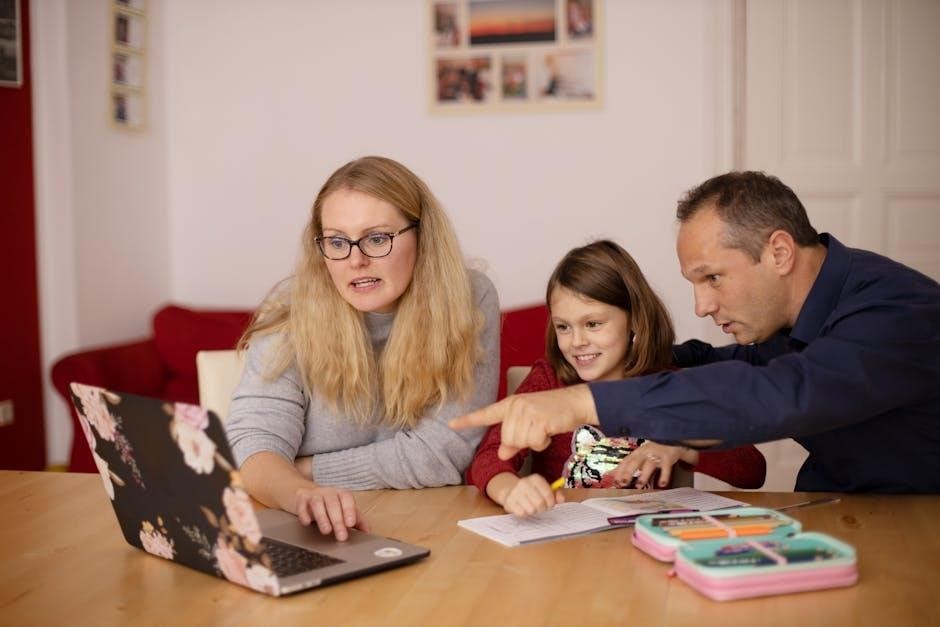
Individual parent education offers personalized guidance‚ addressing unique family needs through focused counseling and assessment‚ unlike broader group approaches.
When Individual Parent Education is Most Effective
Individual parent education proves invaluable when families grapple with complex challenges not easily addressed in group settings. This includes situations involving significant behavioral issues in children‚ parental mental health concerns‚ or difficulties stemming from trauma or adverse childhood experiences.
Furthermore‚ it’s beneficial when a parent feels isolated or lacks a supportive network. Cases requiring highly tailored interventions‚ such as those involving children with special needs or families navigating separation/divorce‚ also benefit greatly. When a parent desires a deeper exploration of their own parenting style and its impact‚ or when there’s a need for intensive skill-building‚ one-on-one support is often the most effective path forward.
Assessment Tools for Individualized Plans
Creating effective individual parent education plans necessitates thorough assessment. The Parenting Stress Index (PSI) is a widely used tool‚ measuring the level of stress parents experience related to their child and parenting role‚ identifying areas needing support.
Complementing this‚ the Dyadic Adjustment Scale evaluates the quality of the parental relationship‚ recognizing that marital dynamics significantly impact parenting. Other valuable assessments explore parental beliefs about child development and discipline. These tools help pinpoint specific strengths and weaknesses‚ informing targeted interventions. A comprehensive assessment considers the child’s developmental stage‚ temperament‚ and any existing behavioral or emotional challenges‚ ensuring a truly personalized approach.
Parenting Stress Index (PSI)
The Parenting Stress Index (PSI) is a frequently utilized‚ self-report tool designed to quantify the level of stress experienced by parents; It assesses stress across three major domains: parent demands‚ child characteristics‚ and parent-child interactions.
The PSI helps identify parents struggling with feelings of inadequacy‚ frustration‚ or being overwhelmed. Scores provide valuable insight into areas where parents may benefit from targeted support and intervention. It’s crucial for individual parent education‚ allowing educators to tailor programs to address specific stressors. Understanding the source of parental stress—whether related to the child’s temperament or the parent’s own challenges—is key to effective counseling.
Dyadic Adjustment Scale
The Dyadic Adjustment Scale (DAS) is a self-report measure evaluating the quality of the marital or couple relationship. While seemingly focused on the couple‚ it’s incredibly relevant to parent education‚ as parental relationship quality significantly impacts child development and parenting effectiveness.
The DAS assesses four key dimensions: dyadic cohesion‚ dyadic consensus‚ dyadic affectional expression‚ and dyadic satisfaction. Low scores can indicate relationship distress‚ potentially contributing to increased parenting stress and less consistent discipline.
In individual parent counseling‚ the DAS can highlight the need for couples therapy or communication skills training. A strong‚ supportive partnership provides a more stable environment for children and enhances the benefits of any parenting intervention.
Techniques Used in Individual Parent Counseling
Individual parent counseling offers a tailored approach‚ addressing unique challenges and fostering specific skill development. Therapists employ diverse techniques‚ often integrating Cognitive Behavioral Therapy (CBT) to help parents identify and modify negative thought patterns influencing their parenting behaviors.
Attachment-Based Parenting Guidance focuses on strengthening the emotional bond between parent and child‚ promoting secure attachment through responsive caregiving. This approach emphasizes understanding a child’s emotional needs and responding with empathy and consistency.
Other techniques include psychoeducation about child development‚ problem-solving strategies‚ and stress management skills. The goal is to empower parents with the tools to create a nurturing and supportive environment.
Cognitive Behavioral Therapy (CBT) for Parents
Cognitive Behavioral Therapy (CBT) for parents centers on the connection between thoughts‚ feelings‚ and behaviors. It helps parents identify unhelpful or negative thought patterns that contribute to parenting stress and ineffective discipline. Through CBT‚ parents learn to challenge these thoughts and replace them with more balanced and realistic ones.
This process often involves behavioral experiments to test the validity of their beliefs and develop more adaptive coping strategies. Parents are guided to practice new skills‚ such as positive reinforcement and consistent limit-setting‚ to improve parent-child interactions.
CBT aims to equip parents with practical tools to manage challenging behaviors and foster a more positive family dynamic.
Attachment-Based Parenting Guidance
Attachment-based parenting guidance focuses on strengthening the emotional bond between parents and children. This approach emphasizes the importance of sensitive and responsive caregiving‚ helping parents understand their child’s emotional needs and signals. The core principle is that a secure attachment provides a foundation for healthy development and resilience.
Counseling explores how a parent’s own attachment history might influence their interactions with their child. Parents learn to provide a safe and secure base from which their child can explore the world‚ and a secure haven to return to when distressed.
Techniques include promoting empathy‚ validating feelings‚ and fostering consistent emotional availability.

Combining Group and Individual Approaches
Hybrid models integrate group support with individual counseling‚ maximizing benefits by addressing both shared experiences and unique family needs effectively.
Hybrid Models: Leveraging the Strengths of Both
Hybrid parent education models strategically combine the advantages of group and individual interventions. These approaches often begin with a group component‚ fostering a sense of community and shared learning amongst parents facing similar challenges. This allows for the efficient dissemination of information and the modeling of positive parenting strategies.
However‚ recognizing that each family’s circumstances are unique‚ a hybrid model incorporates individual sessions. These sessions provide a safe space for parents to explore personal concerns‚ receive tailored feedback‚ and develop customized plans. This blended approach ensures both universal skills are taught and specific needs are addressed‚ ultimately enhancing the effectiveness of the parent education program.
Referral Processes: Identifying Needs for Individual Support
Effective parent education programs incorporate clear referral pathways to ensure parents requiring more intensive support receive it. During group sessions‚ facilitators should observe parents who may be struggling‚ exhibiting high levels of stress‚ or demonstrating difficulties applying learned techniques. Standardized screening tools‚ like the Parenting Stress Index (PSI)‚ can aid in identifying those needing individual attention.
A formal referral process‚ involving informed consent‚ connects parents with qualified counselors or therapists. This might include internal program staff or external community resources. Recognizing limitations – such as privacy laws preventing access to student assignments – is crucial. Proactive identification and timely referrals maximize program impact and support family well-being.

Resources and Materials for Parent Educators
Parent educators can utilize readily available PDF guides‚ workbooks‚ and online platforms to enhance program delivery and support parents effectively.
Available PDF Guides and Workbooks
Numerous downloadable PDF guides and workbooks support parent education initiatives‚ catering to both group and individual sessions. These resources often cover essential topics like positive discipline techniques‚ effective communication strategies‚ and understanding child development stages. Many organizations dedicated to family support offer free or low-cost materials.
Specifically‚ workbooks may include exercises for parents to reflect on their own parenting styles‚ identify triggers for stress‚ and develop personalized action plans. PDF guides frequently summarize key concepts from evidence-based programs like Triple P or PCIT‚ providing concise information for quick reference. Accessing these materials streamlines preparation and enhances the quality of parent education programs‚ offering valuable tools for skill-building and fostering positive parent-child relationships.
Online Platforms and Tools
Several online platforms significantly enhance parent education delivery‚ offering flexibility for both group and individual support. Family Link‚ for example‚ allows parents to manage their child’s Google Account‚ setting screen time limits and app permissions. Interactive websites provide access to articles‚ videos‚ and online courses on various parenting topics.
Furthermore‚ virtual meeting tools facilitate remote group sessions‚ expanding accessibility. Some platforms offer personalized feedback and progress tracking. While direct access to student assignments via platforms like Google Classroom is limited for parents due to privacy‚ email summaries can be enabled with teacher permission. These digital resources complement traditional PDF guides and workbooks‚ creating a comprehensive and adaptable parent education experience.
Legal and Ethical Considerations
Parent education professionals must uphold confidentiality‚ establish clear boundaries‚ and adhere to mandatory reporting requirements regarding child safety and well-being.
Confidentiality and Boundaries

Maintaining strict confidentiality is paramount in parent education‚ fostering a safe space for vulnerable disclosures. Educators must clearly define the limits of confidentiality at the outset‚ explaining what information will be kept private and exceptions‚ such as mandatory reporting. Establishing professional boundaries is equally crucial; avoiding dual relationships and maintaining objectivity are essential.

This includes refraining from personal interactions outside of scheduled sessions and avoiding self-disclosure that isn’t directly beneficial to the parent’s progress. Clear communication about session length‚ cancellation policies‚ and contact procedures also defines appropriate boundaries. Ethical practice demands respecting parental autonomy while ensuring child safety remains the priority.
Mandatory Reporting Requirements
Parent educators‚ as mandated reporters‚ are legally obligated to report suspected child abuse or neglect‚ regardless of confidentiality agreements. This duty supersedes all other considerations‚ prioritizing the child’s safety and well-being. Educators must be thoroughly familiar with their state’s specific reporting laws‚ including definitions of abuse and neglect‚ and reporting procedures.
Recognizing signs of maltreatment – physical injuries‚ emotional harm‚ or unsafe environments – is critical. Documentation of observations and concerns is essential when making a report; While reporting can be challenging‚ failing to do so carries legal consequences and potentially endangers a child. Educators should seek consultation with supervisors or legal counsel when uncertain about reporting obligations.